Our Dental Superheroes Series:
Updated: Sep 12, 2025
The Craniofacial Orthodontist: More than just braces
What is rarer than a blood red ruby? If you asked me, I would say a Craniofacial Orthodontist. When we think of the traditional Orthodontist, we think of the braces we got when we were teenagers, and the retainers we lost later. The development of Craniofacial Orthodontics as a subspecialty is a bit more complex in history and certainly requires more training than the traditional Orthodontist.
The specialty of Orthodontics is the oldest in the dental profession. The art of moving teeth through the jawbone goes back to the early Egyptians. Mummies have been found with metal pieces around their teeth. The ancient Etruscans, Greeks, and Romans showed similar banding around the teeth. The philosophers Aristotle and Hippocrates even wrote about ideas to try and straighten teeth.
By the 18th century, the French physician named Pierre Fauchard researched different methods for straightening teeth. He created an early appliance called “the Bandeau” which was akin to an early retainer. He is later known as the Father of Dentistry. Academically, the subject of Orthodontics has been an academic discipline since the 18th century. Kingsley, who is often considered the Father of Orthodontics, lectured to students on the benefits of the movement of teeth for better occlusion in the 1870s.
By the time we get to the 19th century, early Orthodontic treatment really started getting known in the United States. J. Gunnell created what was called “The Occipital Anchorage” which was a dental appliance worn outside the mouth akin to the modern headgear. Dr. Edward H. Angle became known as the “Father of Modern Orthodontics” as he taught and practiced in the US Midwest in the late 19th century. He was the first member of the dental profession to limit his practice to Orthodontics. He founded the Angle Orthodontist which is an international journal of research that is still in publication today.
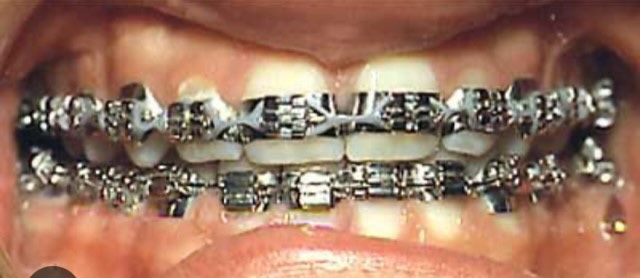
By the middle of the 20th century, dental adhesives became used and completely changed how braces were placed in the mouth. The cementation of dental brackets became the norm, replacing the older method of wrapping each tooth with a metal strip. We’ve come a long way! These days, our colleague Orthodontists utilize 3-D imaging, 3-D printing, and X-ray technology. It is amazing!
The history of the birth and evolution of the Craniofacial team is fascinating. The medical historian, Dr. Lindsey Fitzharris, writes about the British surgeon, Dr. Harold Ghillies, and his early feats in putting together one of the first teams that addressed the reconstruction of the faces of some of the estimated 280,000 men who suffered facial trauma during World War I. These faces were often burned and shot up by the new technologies that early 20th century ushered in – chemical warfare, machine guns, flamethrowers, etc. One battlefield nurse was quoted: the science of healing stood baffled before the science of destroying.”
Dr. Ghillies was one the first plastic surgeons, even before plastic surgery was coined. He soon realized that a lone surgeon can easily sew up a face. However, that did not equal a good outcome for the patient. Ghillies realized Sullivan’s famous axiom, “form follows function,” which had become the touchstone for many architects. This means that the purpose of a building should be the starting point for its design. We can easily see how this applied to Dr. Gillies’ patients. For the men missing parts of their jaws and noses, the reconstruction of their original function to best of one’s ability certainly meant better form for them later. When form follows function in these instances, a better quality of life can be seen.
Dr. Ghillies proved he was a pioneer in assembling a multidisciplinary team of surgeons, dentists, artists, anesthesiologists, sculptors, and photographers. He developed his interest in facial lesions using a dental approach and was one of the first surgeons to do so. His experiences made him aware of the many jaw and craniofacial injuries that the trench warfare of World War I had produced. To address the needs of all these facial injuries, he utilized his persuasive skills to promote the development of a multidisciplinary approach to facial injury treatment at Cambridge Military Hospital in 1916 and at Queen’s Hospital the following year. The approach was so successful that subunits were established for the injured Commonwealth personnel in Canada, New Zealand, and Australia. To add to this success, two anesthesiologists who worked with Dr. Gillies, Stanley Rowbotham and Ivan McGill, became leaders in their specialty and became the originators of the nasotracheal intubation technique which became especially helpful in Dental and Craniofacial surgeries in the future.
Speaking of the future- let us fast forward to 2023 where we will learn about our Superhero Orthodontist, Dr. Kristen Lowe.
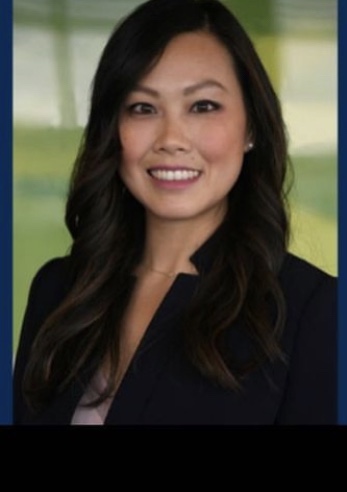
Dr. Lowe- Tell us a little about yourself, your family, and how you find yourself at Children’s Hospital of Colorado. When did you first realize that you wanted to become a Dentist, and then most importantly, when did you first realize that you wanted to become not only an Orthodontist but a Craniofacial Orthodontist?
I grew up just outside of Oakland, California and made my way to Colorado by way of Los Angeles, New York City, and Philadelphia. Before moving to Denver, I practiced at the Children’s Hospital of Philadelphia, where I served as the orthodontist for its busy cleft and craniofacial teams. In 2018, I was offered what I considered a once in a lifetime opportunity to establish the Craniofacial Orthodontics Program at Children’s Hospital Colorado. Moving solo at 36 years old to a new city in which I did not know anyone was daunting, but I have enjoyed the adventure tremendously and have not looked back since. I had the great fortune of being raised with strong female role models who encouraged me to pursue life’s chances and resist allowing fear of the unknown stand in my way.
My paternal grandmother was the first dentist in our family. She earned her dental degree with honors in 1943 from the College of Physicians and Surgeons in San Francisco, which is now the University of the Pacific. My grandmother was one of the first female Chinese American dentists in the country and unequivocally one of the biggest influences in my life. She practiced for seven years at which point she had two of her four sons. At that time, she decided to retire early and become a full-time mom/very enthusiastic fan at her boys’ sporting events. My grandfather, who finished dental school five years after my grandmother, carried on the family practice.
My mother was also in the dental field and practiced hygiene for over 30 years. She loved it because of the connections she made with her patients, and it allowed her the flexibility to be home part time to raise my brother and me. She often lamented, however, that she should have pursued dental school though she never pushed me in that direction. In fact, because I grew up around so many tooth people, I hadn’t considered dentistry while in college. I wanted to pave my own path, and I frankly thought I would pursue medicine.
While an undergraduate student at UCLA, I had two part time jobs: receptionist at an ophthalmology office and SAT instructor; both of which helped shape my decision to pursue dentistry and orthodontics. One of my grandmother’s sisters was the very first Chinese American female ophthalmologist, and so I thought it might be my calling to follow in her footsteps. I was so excited to land a job at this fancy eye doctor’s office in Beverly Hills, but it turns out that I had a very weak stomach, and almost passed out three times the day I shadowed in the OR. I could have probably gotten past the nausea, but my doc also somewhat dissuaded me from pursuing medicine due to the fact that, “insurance companies were dictating how [he] practiced.”
So, I was sort of at a loss. I had geared my college curriculum toward being pre-med, and I wasn’t quite sure what to do at that point as graduation loomed. I enjoyed teaching, but it did not seem like the end game for me. The more I thought about it, dental school made more and more sense, but I was still determined find my own niche within dentistry. The joy I found teaching adolescents (and continued aversion to blood) steered me toward orthodontics. However, it was an oral surgery lecture about cleft palate team care that solidified my decision to pursue the orthodontic specialty. I onlyknew my personal experience with orthodontics, but when I learned how involved orthodontists can be on a craniofacial team, I was really intrigued. That felt special and impactful, and that lecture set the foundation for my practice today.
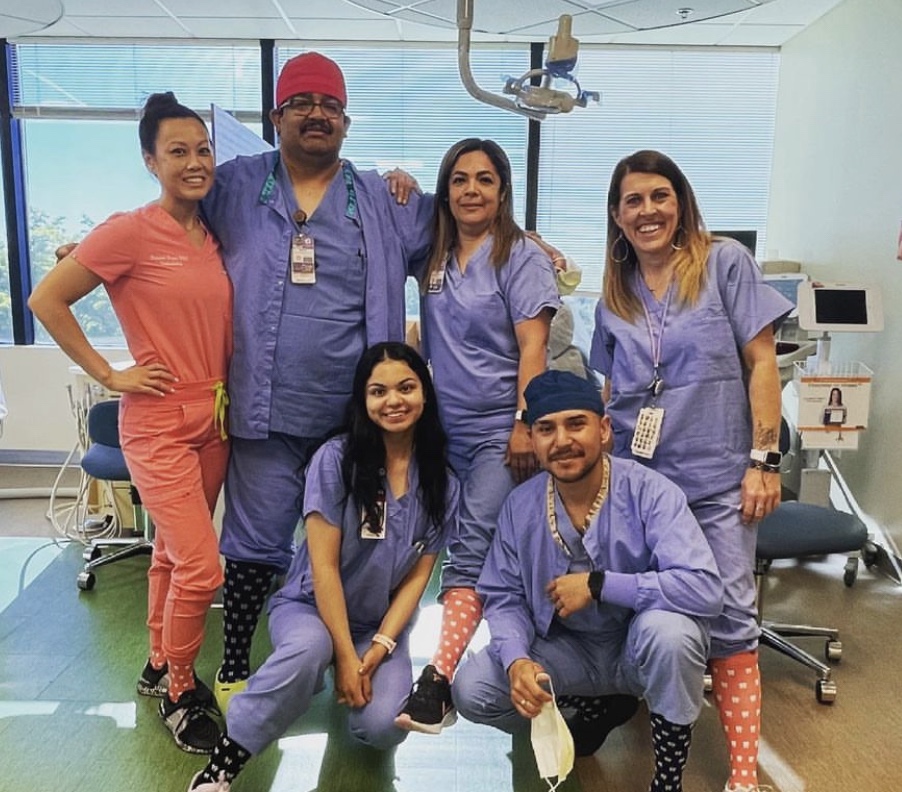
What was the special training beyond your Orthodontic residency that you had to finish in order to become a specialized Craniofacial orthodontist that treats children with cleft lip and palate?
Following residency, I completed a yearlong fellowship in Craniofacial and Special Care Orthodontics at New York University. I had the fortune of being one of Dr. Barry Grayson’s final fellows and learned NasoAlveolar Molding (NAM) for infants with Cleft Lip and Palate from him. It was an intense year in which we learned not only NAM but also to manage patients with complex craniofacial conditions, such as hemifacial microsomia, Apert syndrome and cleidocranial dysostosis.
Tell us about how you started playing golf and what you love most about the game. Which courses are your favorite to visit and play?
I hate to say it, but I started playing golf for a guy who was obsessed with it. I always thought it seemed boring, difficult and time consuming, but once I took a few lessons, I better realized why people enjoy it. It turns out that the years I spent playing tennis and softball translated well to golf, and I love the feeling of hitting a long drive. Last year, I joined a super fun group of sixteen ladies for a spring golf league at City Park, so I’d say that is my favorite course.
We feel very blessed to have you at Children’s Colorado. In fact, when we are teaching the residents, and we need your input, we ALL say that we wish we could clone you because we know you are so needed. There aren’t many clinicians that do what you do in the US. With that being said, you are a busy person for sure! How do you balance your life so that you get the self-care, breaks, etc., that you need so you can be at your best when caring for our vulnerable patients?
That is incredibly kind. Balance is a work in progress for me. I used to feel that I had to work all the time to achieve my goals, but I realized while in Philly that this is incredibly inefficient and unrealistic. I learned that it’s impossible to bring my best to work when I’m not physically and mentally healthy. I had a huge wakeup call when I needed to have emergency surgery to remove my stone ridden gall bladder because I had ignored the abdominal pain I had for decades; I was always “too busy” to go to the doctor. There was so much inflammation that I needed open surgery and so now I have a large abdominal scar to forever remind me to take better care of myself.
Moving to Colorado has been a positive change in that the culture here is generally healthier: people are active and prioritize balance more than those in the Northeast. I think good time management is the key to balance, and so I schedule time daily for exercise and meditation. I’m working on cooking more and learning to say no as well. J
How do you feel the pandemic changed you as a clinician? How do you think it has changed you as a person?
I recognize that the pandemic was a stressful time filled with trauma and loss for so many. However, it presented some unique and rewarding opportunities for me. I greatly appreciated what the pandemic allowed me to do: stop and reassess. I had the chance professionally to refine our clinical systems and work toward making them better and more efficient for our patients and team. I was always so focused on the day-to-day clinical work that I previously didn’t prioritize taking the time to analyze my process. Now, this is a quarterly exercise I complete with my entire team.
Personally, I went through a similar process. I took the time to ask myself how I wanted to make the most of this found time the pandemic afforded me. It reignited my passion for learning new things and also got me comfortable with just being still and the beauty of occasionally doing nothing at all.
Thank you, Dr. Lowe for your time and input on this publication.
Works Cited
Philippe J. La préhistoire de l’orthodontie [The prehistory of orthodontics]. Orthod Fr. 2015 Jun;86(2):197-200. French. doi: 10.1051/orthodfr/2015015. Epub 2015 Jun 26. PMID: 26337097.
Piccinini P., et al. History of Plastic Surgery: Sir Harold Gillies, a Pioneer of Reconstructive Plastic Surgery. Rev. Brax. Cir Plast. 2017;32(4) 608-615.
Wahl N. The AJO-DO and the history of orthodontics. Am J OrthodDentofacial Orthop. 2015 Nov;148(5):703-5. doi: 10.1016/j.ajodo.2015.07.025. PMID: 26522020.
Will L. The History of Orthodontic Education: A Century of Development and Debate. Am Journal Orthod Dentofacial Orthop2015; 148:901-13.

Comments